



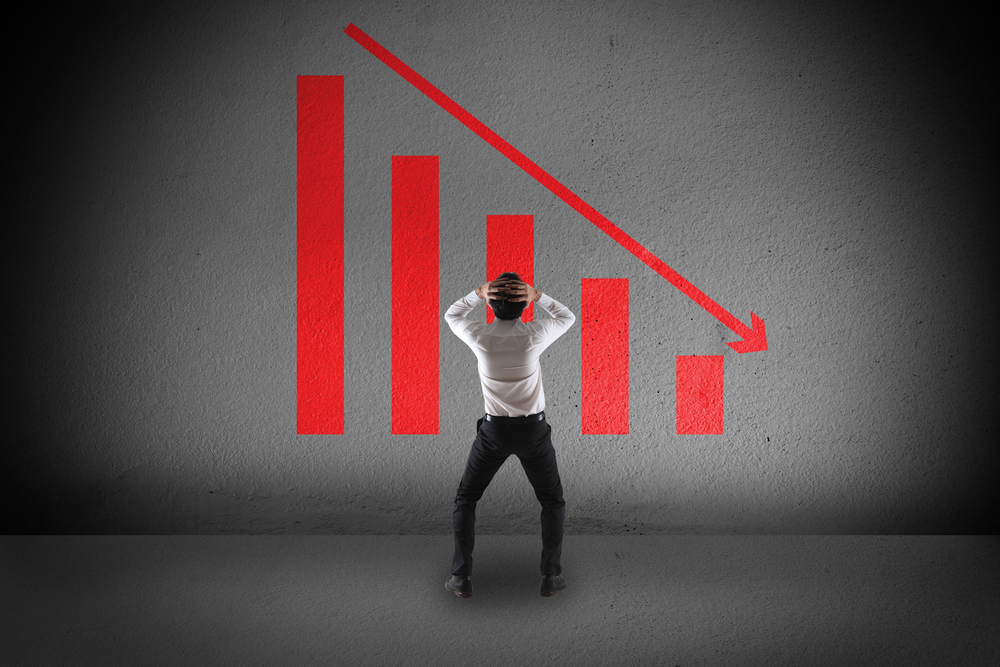
A portfolio decline is unpleasant, but it is just as natural a part of investing as periods of growth. Financial markets do not move in a straight line, and even a well-constructed portfolio can lose value in the short term due to weaker economic data, higher interest rates, geopolitical tensions, or a shift in investor sentiment.
First Manage Emotions, Then Take Action
When the value of a portfolio falls, uncertainty or fear is a natural reaction. After all, it is not just about numbers on a screen, but often about real savings and long-term financial goals. However, it is precisely in such moments that the risk of rushed decisions arises, especially panic selling. The first reaction should therefore not be immediate action, but taking a step back (you can read more about why emotions often influence investment decisions in our previous article). An investor should remind themselves why they are investing, what their time horizon is, and whether their original plan has truly changed.
A 10% Decline: Time to Review, Not Panic
A decline of around 10% may feel unsettling, but in long-term investing it is still a relatively common correction. Instead of panicking, it is advisable to check whether financial goals, the investment horizon, personal circumstances, or the reason why the portfolio was originally set up in a certain way have changed. If the strategy still meets the investor’s needs and the portfolio is adequately diversified, such a decline does not necessarily have to be a reason for major changes.
A 20% Decline: Testing the Portfolio’s Resilience
With a 20% decline, the investor begins to feel more strongly whether their strategy was realistically designed for more difficult periods as well. A deeper downturn often reveals whether the chosen level of risk truly matches their experience, financial situation, and psychological resilience. At this stage, it makes sense to look at diversification, the ratio between equities, bonds, and cash, as well as whether the portfolio is too dependent on a narrow group of assets or sectors. If the investor finds that they are coping with the decline worse than expected, it may be a signal to adopt a more conservative setup in the future.
A 30% Decline: A Crisis That Requires a Plan
A 30% decline already represents a challenging scenario that tests both the strategy and the investor’s psychological resilience. In such a situation, it is important not to sell merely under the pressure of fear, but first to understand whether this is a broader market decline or a more serious problem with a specific investment, company, or sector. A temporary market sell-off may be part of the investment cycle, while a deterioration in fundamentals may mean that the original investment thesis no longer holds. The quality of the assets, the level of diversification, and the investor’s own investment horizon are therefore decisive.
Check Why You Still Hold the Investment
When a portfolio declines, investors often focus mainly on the price, but price does not tell the whole story. The more important question is why they still hold the investment. A broadly diversified ETF that tracks a large part of the market is assessed differently from a single stock, where the decline may be linked to weaker results, a loss of competitive advantage, or a worsening company outlook. Investors should therefore verify whether the original investment thesis still applies and whether the asset still fits into their strategy.
Rebalancing and Regular Investing as Tools of Discipline
During more significant declines, it can help if the investor does not try to perfectly time the market but sticks to a system. Rebalancing makes it possible to return the portfolio to its original allocation across different asset classes and thereby restore the planned level of risk. Regular investing, in turn, reduces the pressure to find the ideal moment to buy, because the investor buys continuously, including during periods of lower prices. Both strategies help investors stay committed to their plan instead of making decisions based on short-term emotions (we discussed in more detail why a portfolio needs to be continuously adjusted back to its original plan in our previous article).
What Matters Most Is How You React to the Decline
A portfolio decline is a test of both the investment plan and the investor’s mindset. From a long-term perspective, the greatest risk may not be the market decline itself, but rather a rushed reaction to it. Panic selling, trying to catch the bottom, or completely changing strategy under the influence of fear can cause more damage than the downturn itself. A good strategy should therefore work not only during periods of growth, but also during periods when markets test investors’ patience and discipline.
For more investment trends and useful tips, take a look at our previous articles on AxilAcademy.

He has been trading in the capital markets since 2002, when he started as a commodity Futures trader. Gradually he shifted his focus to equity markets, where he worked for many years with securities traders in Slovakia and the Czech Republic. He also has trading experience in markets focused on leveraged products such as Forex and CFDs, and his current new challenge is cryptocurrency trading.