



Even when we invest with a clear plan and a long-term goal, our own reactions to market movements often surprise us at critical moments. Why do we experience negative periods more intensely than positive ones, and how do these feelings influence our decisions? In this article, we take a closer look at the psychological background of investor behavior and its impact on investment results.
What Is Loss Aversion
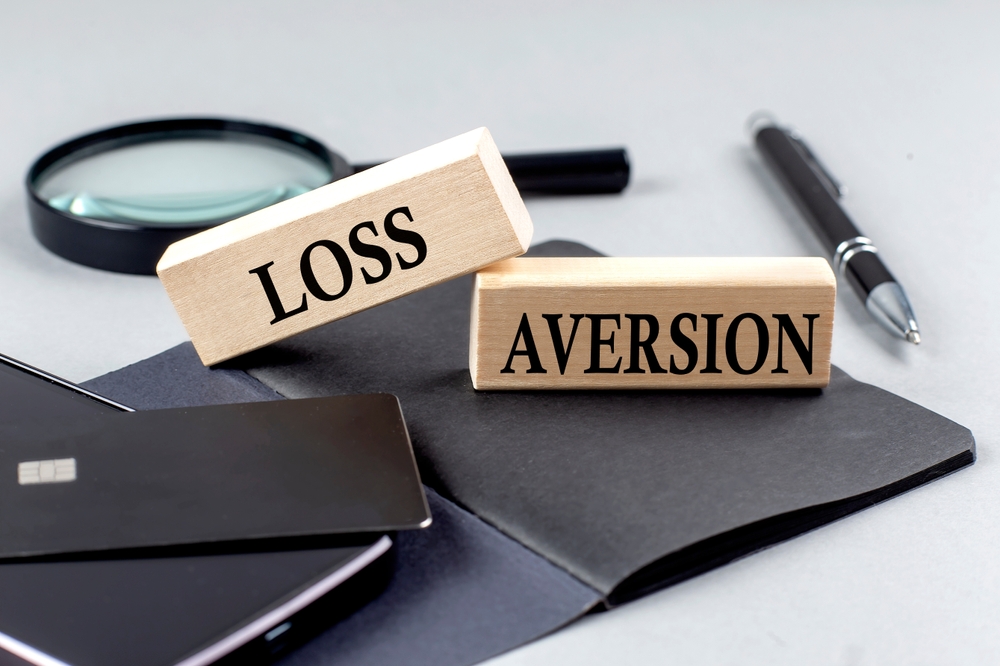
This very difference in how we experience losses and gains is explained by the concept of loss aversion. It is a psychological phenomenon in which the pain of a loss is perceived much more intensely than the pleasure of an equally sized gain. In other words, losing 100 euros hurts us more than earning the same amount pleases us. This phenomenon was described within behavioral finance by psychologists Daniel Kahneman and Amos Tversky, who showed that people systematically deviate from purely rational behavior when making financial decisions.[1] In investing, this means that the desire to avoid losses often outweighs the pursuit of long-term returns, even though this is counterproductive from a long-term perspective.
Why Short-Term Losses Dominate Our Perception
Loss aversion manifests itself most strongly over short time horizons. The human brain is evolutionarily wired to respond to immediate threats, which is why every short-term decline feels urgent and emotionally intense. When we track an investment day by day, market fluctuations appear to be a problem that needs to be solved immediately. In contrast, long-term gains emerge slowly, gradually, and without a strong emotional impulse, which is why we perceive them less intensely. The uncertainty associated with short-term market movements often overwhelms rational thinking about long-term goals, even though those goals are crucial for investors.
How Loss Aversion Manifests in Investors
This psychological pressure translates into specific investor behavior. A common reaction is the premature sale of investments during downturns, motivated by the desire to immediately stop unpleasant emotions, even though the original strategy did not anticipate such a move. On the other hand, investors may hold onto losing positions for too long in the hope that they will “at least get back to break-even,” thereby postponing a rational decision. This entire process is further exacerbated by frequent portfolio monitoring, which constantly highlights short-term fluctuations and keeps investors in a state of emotional tension. As a result, the long-term plan fades into the background and decision-making becomes driven by current market sentiment (if you are interested in how emotions influence investor decisions at the opposite extreme as well, we discuss this topic in more detail in our previous article on the FOMO effect).
Impact on Returns
Although individual emotional decisions may seem negligible, their cumulative impact on returns is significant. Investors who react to short-term losses often exit the market at the wrong time, interrupt their investment strategy, or shift capital under emotional pressure. In doing so, they miss periods of market recovery, which historically tend to follow downturns and make up a substantial portion of overall returns. Poorer results therefore do not arise because investors chose the wrong assets, but because they failed to stay invested at critical moments (similar investor behavior could also be observed during past crises, which we discuss in more detail in one of our previous articles).
How to Set Boundaries for Emotions
The solution is not to suppress emotions, but to create an investment system that limits their influence on decision-making. The foundation is a clear long-term plan and a defined investment horizon, which provide stability during periods of increased volatility. Thanks to them, short-term declines can be perceived as a natural part of the investment journey rather than as a failure of the strategy. Limiting frequent portfolio checks also helps. The less attention we pay to daily fluctuations, the less room emotions have to take control. Automation of investing plays an important role as well, as it reduces the need to react to current market moods and supports consistency.
The Real Difference Between Investors
Loss aversion is a natural part of human behavior and does not spare even experienced investors. It is not a sign of weakness, but evidence that investing is largely a psychological discipline. True investment success therefore does not lie in the absence of emotions, but in the ability not to be governed by them. Discipline, patience, and trust in a long-term plan have a far greater impact on results over time than short-term market fluctuations. Investors who understand this difference significantly increase their chances of achieving their financial goals.
For more investment trends and useful tips, take a look at our previous articles on the AxilAcademy website.

He has been trading in the capital markets since 2002, when he started as a commodity Futures trader. Gradually he shifted his focus to equity markets, where he worked for many years with securities traders in Slovakia and the Czech Republic. He also has trading experience in markets focused on leveraged products such as Forex and CFDs, and his current new challenge is cryptocurrency trading.